In Belgium, photovoltaic energy has become an integral part of the energy landscape. In 2025, the question is no longer about adopting the technology, but about how it is coherently integrated into everyday energy use and within an evolving framework.
As the year draws to a close, this provides an opportunity to review the current model while clearly identifying future perspectives, particularly at the level of European industrial policy and changes to electricity pricing from 2026 onwards.
2025 Review: a mature photovoltaic market
In 2025, the Belgian photovoltaic market is built on solid foundations. The technology is well established, installations are widely deployed among both private individuals and businesses, and the existing regulatory framework has remained largely stable throughout the year.
This review highlights a gradual shift in expectations:
-
photovoltaic energy is no longer seen solely as a means of production,
-
self-consumption is taking on an increasingly central role,
-
projects are increasingly approached within a broader energy strategy.
This level of maturity marks the end of a cycle primarily focused on installed capacity and grid injection.
2025: a year of transition and preparation
The year 2025 does not represent a regulatory or technological break. It stands out for its intermediate position: current rules remain in force, while several important developments have already been adopted or announced, with implementation scheduled for a later stage.
This situation makes 2025 a year of transition in the strict sense of the term: a period during which decisions and projects are designed with known future frameworks in mind, without those frameworks yet being binding.
The Net-Zero Industry Act: a structuring European industrial framework
The Net-Zero Industry Act (NZIA), adopted at the level of the European Union, aims to strengthen industrial production capacity for low-carbon technologies within Europe, including photovoltaics.
Its objective is to reduce dependence on non-European imports and to secure strategic value chains.
In 2025, the NZIA primarily serves as an industrial reference framework:
-
it guides the strategies of manufacturers and industrial stakeholders,
-
it influences certain professional projects and structured markets,
-
it progressively values criteria such as industrial resilience, traceability, and the European origin of equipment.
It does not introduce direct changes for residential installations in the short term.
A more pronounced impact for businesses
The effects of the NZIA primarily concern businesses and professional photovoltaic projects. In these contexts, Made in Europe is increasingly becoming an important assessment criterion, particularly for:
-
large-scale projects,
-
companies integrating ESG requirements,
-
certain public or semi-public procurement processes.
This represents a gradual and structuring evolution, without a general obligation at this stage.
The importance of the local industrial fabric
Within this European framework, the presence of local industrial players takes on particular significance. The manufacturing of photovoltaic panels in Belgium fits into this dynamic of strengthening European value chains, in line with the orientations of the NZIA.
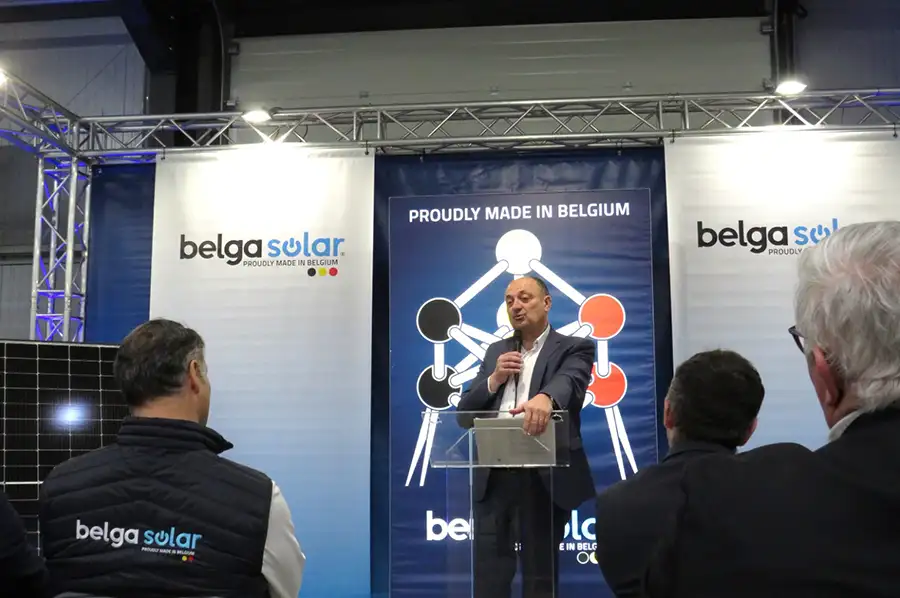
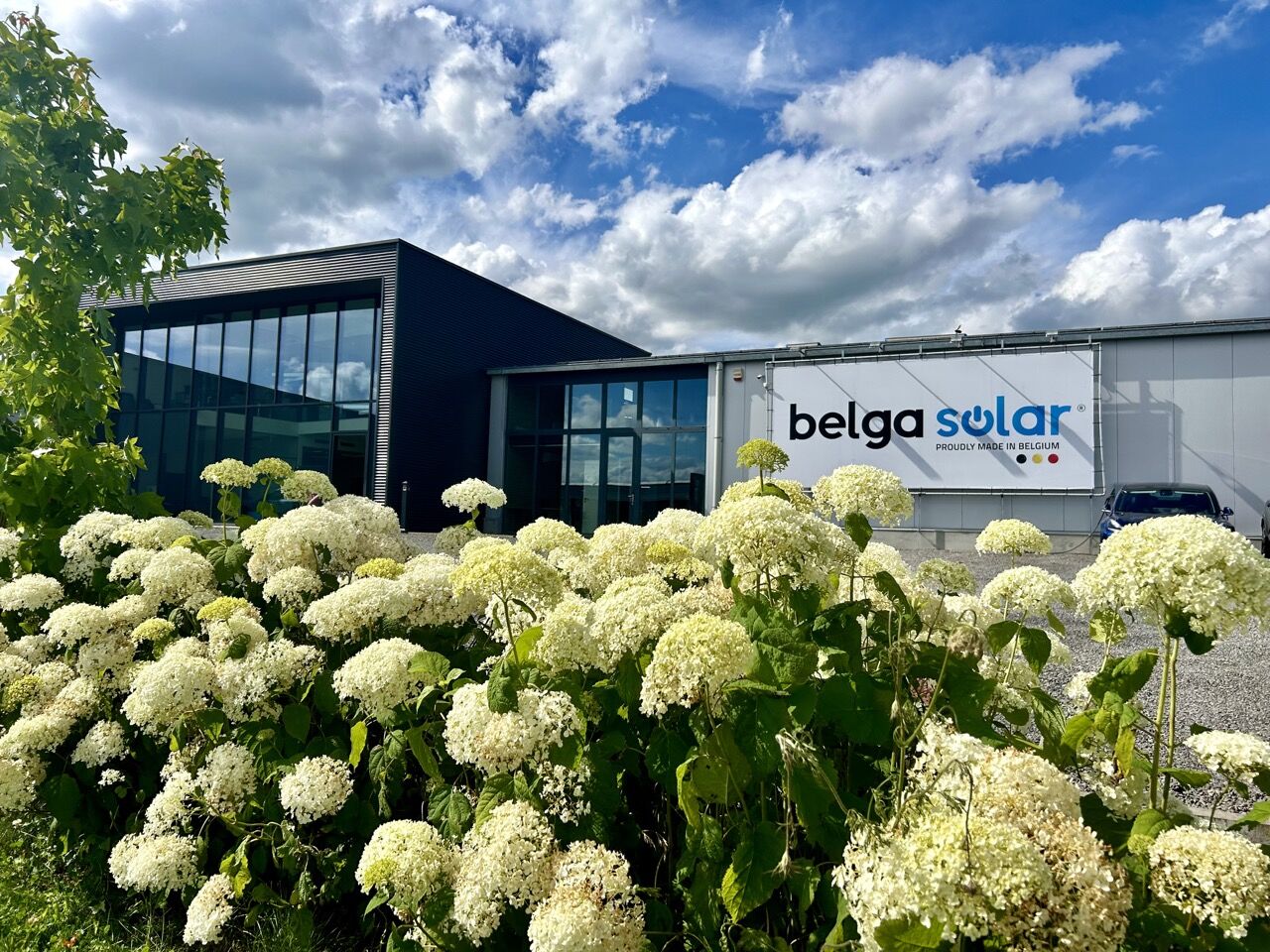
In this context, Belga Solar positions itself as a local industrial player, contributing to photovoltaic production anchored in Belgium and aligned with a long-term industrial vision.
Changes to electricity pricing from 2026
Alongside industrial developments, another significant change concerns all electricity consumers in Belgium: the modification of the electricity pricing framework scheduled to take effect from 1 January 2026.
This change aims to better reflect consumption timing and grid constraints, particularly in relation to demand peaks.
This reform applies to both private individuals and businesses and invites a rethinking of how electricity is consumed on a daily basis.
Implications for the use of photovoltaic energy
Within this new pricing framework, photovoltaic energy remains fully relevant, but its effectiveness will increasingly depend on the alignment between production and consumption.
Key perspectives include:
-
further optimisation of self-consumption,
-
better alignment of energy use with production periods,
-
a broader reflection on energy management, for both households and businesses.
The year 2025 makes it possible to integrate these parameters into future projects gradually, without immediate constraints.
A broader evolution of the energy model
From 2025 onwards, photovoltaic energy in Belgium is part of a broader evolution affecting all stakeholders, both private individuals and businesses.
Industrial and pricing frameworks are moving towards a shared objective: greater coherence between local production, actual consumption, and grid balance.
In this context, designing photovoltaic projects with a long-term perspective—taking into account both the origin of the equipment and how the electricity produced is used—becomes a central element of energy decision-making.
Outlook beyond 2025
The 2025 review highlights a gradual transition towards a more structured energy model. Short- and medium-term perspectives are not based on questioning photovoltaic energy itself, but on its more refined integration into the electricity system, both from an industrial and a usage perspective.
The key challenges in the coming years will mainly relate to:
-
aligning local production with actual consumption,
-
ensuring coherence between the European industrial framework and energy investments,
-
adapting behaviours to a more balanced electricity system.
In this context, the role of local players becomes increasingly important. As a Belgian manufacturer of photovoltaic panels, Belga Solar is part of this evolution by contributing to a locally anchored solar value chain, aligned with European orientations and the realities of the Belgian market.
This local industrial presence provides coherence within an evolving energy landscape, where sustainability, traceability, and a long-term vision are becoming defining criteria in energy-related decisions.